
Landing Page vs Website for Google Ads: Which Do You Need?
Landing Page vs Website: What Does Your Google Ads Campaign Need? Use a dedicated landing page when your Google Ads campaign needs a specific offer, audience message or enquiry process that your existing website does not support. Use an existing service...
- Oct 10, 2026
- 11 min read
By Asif Shaik

Landing Page vs Website: What Does Your Google Ads Campaign Need?
Use a dedicated landing page when your Google Ads campaign needs a specific offer, audience message or enquiry process that your existing website does not support. Use an existing service or product page when it already gives visitors the information and next step they need.
A homepage can also work for searches about your business as a whole, provided the advertised offering is easy to find.
The landing page vs website for Google Ads decision depends on what happens after the click. Can the visitor recognise the offer, assess whether it suits them and take the intended action? Choose a destination that meets those needs and that your team can keep accurate and working.
A Landing Page Can Be Part of Your Website
A website brings together information about your business, including services, products, project examples, company details and contact options.
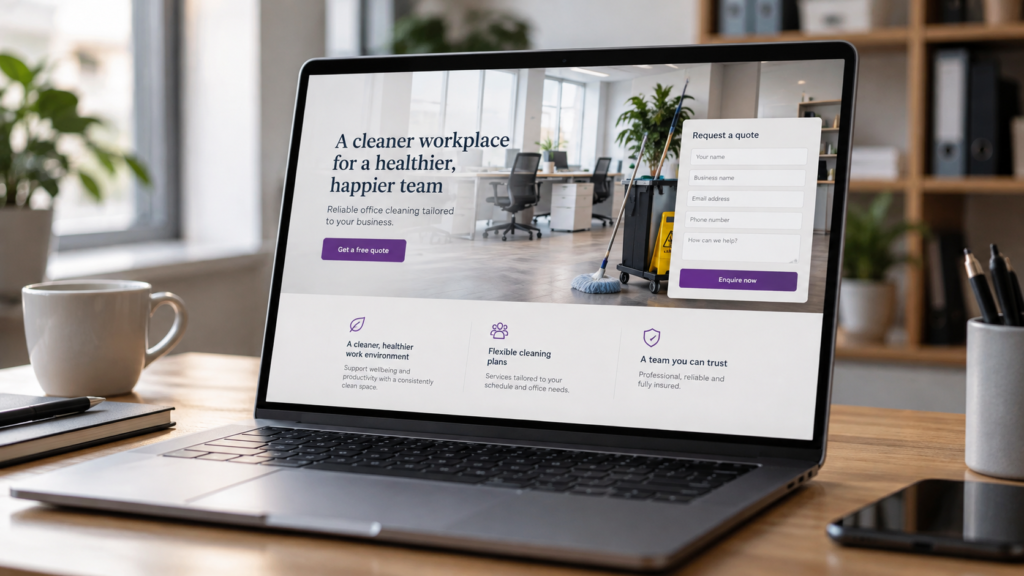
A dedicated landing page focuses on a particular campaign, offer or audience. A cleaning company, for example, might create a page for recurring office-cleaning enquiries while its wider website covers residential and specialist cleaning.
In Google Ads terminology, a “landing page” is simply the page someone reaches after clicking an ad. An existing service page, product page or homepage can therefore be your landing page.
Here’s a dedicated landing page means a page created specifically for an advertising offer or audience. It can sit within your main website and use the same domain.
Which Destination Fits Your Campaign?
Choose the destination according to the advertised offer and the information visitors need before acting.
| Campaign situation | Suitable starting destination | What should determine the choice |
|---|---|---|
| One offer for a clearly defined audience | Dedicated landing page | The campaign needs distinct messaging, evidence or form questions. |
| A specific service already explained well | Existing service page | The page covers the advertised service and provides a clear enquiry route. |
| A specific product available to purchase | Product page | Visitors can inspect specifications, select options and complete checkout. |
| Several related products to compare | Relevant category page | Visitors can browse suitable options without navigating unrelated categories. |
| A search for your business name | Homepage or relevant branded page | The destination reflects whether the visitor wants the whole business or a particular offering. |
| A temporary promotion | Dedicated page or updated relevant page | Offer terms, eligibility and expiry information can be kept accurate. |
These are starting points. A dedicated page with missing information may serve visitors less effectively than an existing page that answers their questions.
When a Dedicated Landing Page Is Worth Building
A dedicated page is useful when the campaign requires a distinct experience.
Your Offer Needs Its Own Explanation
Suppose a training provider advertises an evening course for working professionals. Its general course page mixes daytime classes, corporate training and unrelated subjects.
A dedicated page can bring together the evening schedule, entry requirements, course content and registration process. That gives the advertised offer enough space without changing how the provider presents its other courses.
The reason to build is the information gap—not simply the fact that advertising is involved.
Your Audience Needs Different Evidence
A software company selling to retailers and manufacturers may need different integration details, examples and project questions for each audience.
Separate destinations make sense when these differences affect the buying decision. Replacing an industry name in otherwise identical copy does little to help visitors assess suitability.
The Campaign Needs a Different Enquiry Process
A general contact form may be unsuitable for a campaign that requires appointment selection, file uploads or project-specific questions.
A dedicated page can introduce that process while keeping the wider website’s contact options appropriate for other visitors.
It can also provide a controlled place to test an offer or layout. However, adding another page creates responsibilities: someone must maintain the content, check the form and update the offer when circumstances change.
When an Existing Website Page Is the Better Fit
An existing service page can support a campaign when it combines a relevant offer with the information buyers need to make a decision.
For commercial air-conditioning installation, that might include building suitability, installation scope, project examples and maintenance options. Visitors may need this context before requesting a quote.
Assess the closest existing page against five questions:
- Does it clearly explain the advertised service?
- Does it identify suitable customers and any important limitations?
- Does it provide relevant, credible evidence?
- Is the enquiry or purchase route easy to use?
- Can the content and contact process be maintained reliably?
If those requirements are already met, a separate campaign page needs a clear additional purpose.
If the page serves paid, organic and referral visitors, proposed changes should suit those audiences too. A campaign-specific discount or restrictive form may belong on a separate page even when the underlying service is the same.
Can You Send Google Ads Traffic to Your Homepage?
Yes, when the homepage matches what the visitor is looking for.
A general brand search may reasonably lead to the homepage. A business with one straightforward service may also explain its offer and contact route there clearly.
A broad homepage is less suitable when a specific advertised service is buried among unrelated options. Someone clicking an office-cleaning ad should be able to establish immediately that the company serves offices.
Compare Build Effort and Ongoing Maintenance
The decision includes both the initial work and what the business must maintain afterwards.
| Option | Implementation considerations | Ongoing responsibilities |
|---|---|---|
| Improve an existing service page | Review its content, layout and enquiry process while preserving its usefulness for different traffic sources. | Maintain one shared destination and check that campaign changes still suit its wider audience. |
| Build a dedicated campaign page | Create the offer content, relevant evidence, form, tracking and supporting links. | Keep campaign terms current, test integrations and manage any duplicated service information. |
| Rebuild the wider website | Review site structure, content and functionality across multiple pages. The scope needs justification beyond one campaign. | Maintain the broader site, integrations and customer journeys. |
A dedicated page is not automatically faster or cheaper. Content preparation, approvals, integrations and testing affect the work required.
A wider rebuild may be justified when several services are poorly explained, navigation prevents buyers finding information, or technical limitations affect the whole site. One campaign’s weak performance alone does not establish that need.
Bixeltek’s professional web design services cover both website development and campaign landing pages, so the scope can follow the requirements identified during review.
Give Visitors Enough Information to Trust the Offer
Focus should make the decision easier without removing information buyers need.
Depending on the service, useful content may include:
- What is included and excluded.
- Who the offer is suitable for.
- Areas served or delivery limitations.
- Relevant project examples and genuine reviews.
- Business identity and contact details.
- What happens after an inquiry.
A short page may suit a simple offer. A complex purchase may require specifications, process details or supporting documents.
Likewise, removing navigation is not a universal improvement. Links to relevant projects or company information can help a cautious buyer. Keep useful routes accessible while reducing unrelated choices.
Check the Mobile Enquiry Experience
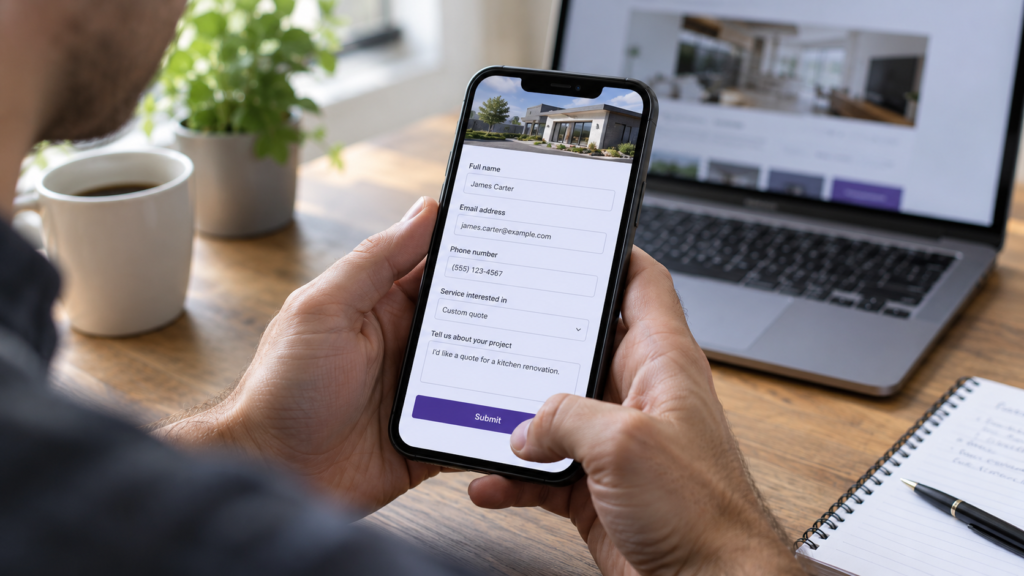
Open the proposed destination on a real phone and complete the intended action.
Check that text is readable, fields are easy to complete, error messages explain the problem and banners do not cover important buttons. Google PageSpeed Insights can help identify loading and responsiveness issues, but its score does not confirm that a form works.
Ask for information needed at that stage. A quote request may reasonably need the service type and location; a complex project may require additional scope details. There is no fixed field count suitable for every business.
Submit a labelled test enquiry using valid contact details appropriate to the intended market. Confirm that the submission succeeds, reaches the business’s records and alerts the responsible person.
For phone and messaging links, opening the dialler or app verifies the link. It does not establish that a call connected or a message was sent.
Measure the Outcomes That Matter
Before comparing destinations, distinguish between:
| Outcome | What it establishes |
|---|---|
| Button click or form opening | A visitor interacted with the contact route. |
| Completed enquiry | A request was successfully submitted or an actual customer conversation was recorded. |
| Qualified lead | The enquiry meets the business’s defined service, location or project criteria. |
| Booking or sale | A later commercial outcome occurred. |
Verify that submission tracking follows confirmed success and that failed attempts do not generate the same lead event. Check business records alongside advertising reports.
For campaigns using conversion-based bidding, review which conversion actions the campaign uses for optimisation. A test judged on form openings can favour a page that generates interactions without producing useful enquiries.
Where practical, compare destinations through a controlled test with consistent offers and targeting. Allow for the time visitors take to enquire and the separate time reports take to update. Reconcile records using the same date basis and time zone. Sparse outcomes may leave the result inconclusive.
Bixeltek’s Google Ads management services include landing-page optimisation and conversion tracking when both the destination and its measurement need review.
Hypothetical Example: Choosing to Improve the Existing Page
This example is illustrative, not a Bixeltek client result.
Hypothetical example: A cleaning company is deciding whether to build a dedicated page for its office-cleaning campaign.
| Stage | Evidence or decision |
|---|---|
| Observed symptom | Paid visitors reach the office-cleaning service page, but few completed quote requests arrive. |
| Destination review | The page already explains recurring office cleaning, service areas, the quote process and relevant commercial project examples. |
| Enquiry test | On mobile, a required property-type field offers only residential options. An office manager cannot accurately complete it. |
| Scope chosen | Retain the existing destination and repair the commercial enquiry form. The review has not identified a need for different campaign content. |
| Verification | A labelled office-cleaning request submits successfully, reaches the business’s records and produces one intended submission event. |
The test verifies the corrected enquiry path. It does not prove that all performance issues are resolved; subsequent enquiry volume and quality still need assessment.
Choose the Appropriate Scope for Your Campaign

Choose the scope that resolves the campaign’s requirements and supports reliable ongoing use.
If the choice between a campaign landing page, an existing service page and wider website work is unclear, Bixeltek can review the advertised offer, proposed destination and enquiry process to help define the appropriate scope.